
Is Surveillance Legal in Ottawa? Ontario Rules
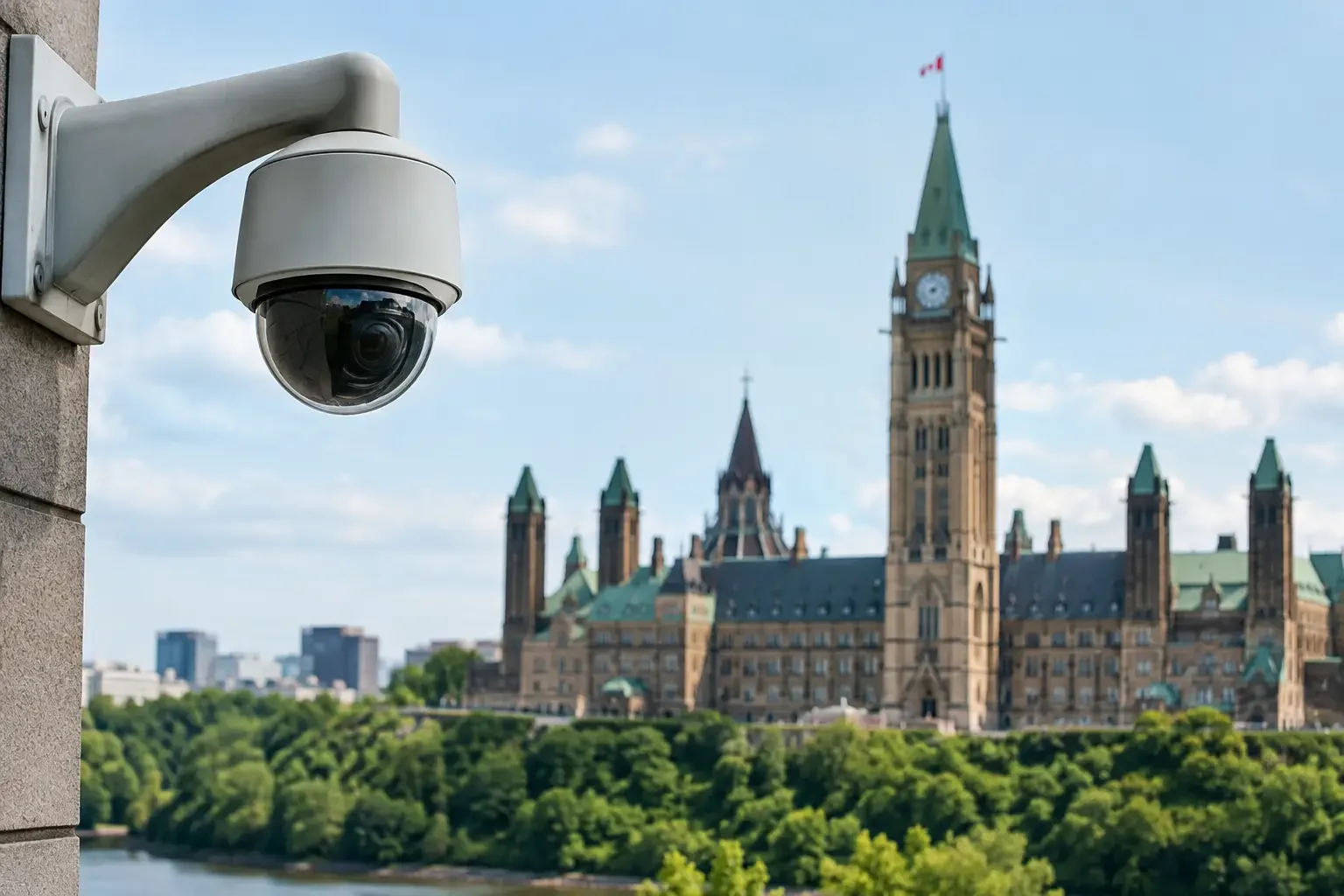
A person who suspects deception often reaches the same difficult question before taking any action: is surveillance legal? The answer in Ottawa and across Ontario is not a simple yes or no. Lawful surveillance depends on who is observing, where the observation occurs, how information is collected, and whether the work respects privacy, property, and criminal law.
Surveillance can be a legitimate way to establish facts. It can also create serious legal and personal consequences when it crosses a boundary. The difference is discipline. My role is to pursue verifiable information without compromising the client, the investigation, or the law.
Is surveillance legal in Ontario?
Surveillance is generally legal when a person observes and documents conduct from a lawful position, using lawful methods, without intruding on a reasonable expectation of privacy. A person walking in public, entering a workplace open to the public, or traveling on visible roadways may be observed. That does not make every form of recording or every pattern of observation appropriate.
The circumstances matter. Filming someone from a public sidewalk is very different from entering private property, looking through a residential window, recording a private conversation, or persistently following someone in a way that causes fear. A lawful purpose does not excuse an unlawful method.
For private investigators in Ontario, professional conduct is also governed by the Private Security and Investigative Services Act. The Act sets licensing requirements and rules for investigators, including conduct, identification, recordkeeping, and the limits of the work. I hold a valid Ontario private investigator licence and handle each file personally. There are no subcontractors between a client’s concern and the person responsible for the work.
Privacy is the central boundary
Privacy is not limited to a home. Canadian courts consider whether a person had a reasonable expectation of privacy in the specific circumstances. A private residence, a hotel room, a washroom, a changing area, and a confidential conversation usually demand a far higher level of privacy than a public street.
This is why professional surveillance begins with a legal and operational assessment, not with a camera. I consider the objective, the available lawful vantage points, the risks to everyone involved, and whether the information sought can realistically be obtained without unnecessary intrusion.
In a civil, family, insurance, or workplace-related matter, clients often want certainty immediately. But the desire for an answer does not create permission to cross property lines or invade someone’s private space. Good investigative work is controlled. It gathers what can be defended, not merely what can be captured.
Observation from public places
Observation from a public place is often lawful, provided the conduct remains reasonable and non-harassing. An investigator may document visible movements, meetings, locations, or activities relevant to a legitimate file. The work must still have a defined purpose.
For example, a brief record of an individual’s publicly visible activity may be relevant to a disputed claim. Indefinite observation with no clear investigative objective is harder to justify. Proportionality matters: the scope of the work should match the question that needs to be answered.
Private property changes the analysis
Private property is not a shortcut to evidence. Entering land without permission may expose a person to trespass consequences, even if the purpose is to gather information. That includes areas around homes, fenced spaces, and facilities that are not open to the public.
I do not treat proximity as permission. If a fact cannot be lawfully observed from a permitted location, the correct response is to reconsider the investigative plan, not force access.
Video surveillance can be lawful, but context decides
Video is often the least misunderstood form of surveillance because people expect to be seen in public. Yet even video collection has limits. Recording someone where they can reasonably expect privacy can create legal exposure. So can using footage beyond the purpose for which it was collected or sharing it carelessly.
A business owner may have legitimate reasons to use visible security cameras around entrances, inventory areas, or parking lots. Employees and visitors should not be secretly monitored in places where privacy is expected. Organizations also need to consider their privacy obligations and whether the surveillance is necessary, transparent where appropriate, and limited to a legitimate purpose.
For an investigation, footage only has value if its origin, date, context, and continuity can be explained. A clip without a clear record may raise more questions than it answers. I keep careful notes and preserve material in a manner that supports its reliability if it must later be reviewed by counsel, an insurer, an employer, or a court.
Audio recording carries greater risk
Audio is more sensitive than video because it captures communications rather than visible conduct. Under Canadian criminal law, recording a private conversation can be lawful where one participant in the conversation consents to the recording. This is often described as one-party consent.
That rule is not a broad authorization to record other people’s conversations. If the recorder is not a participant and does not have lawful consent from a participant, intercepting private communications can be criminal. The setting, the people involved, and the method used all matter.
There are also practical concerns. A recording may be technically lawful yet inappropriate for the purpose, harmful to a relationship, or difficult to use in a legal proceeding. Before relying on any audio, it is wise to seek legal advice suited to the facts of the matter. I do not provide legal advice, and I do not use methods that place a client or an investigation at unnecessary risk.
When surveillance becomes harassment or intimidation
A pattern of conduct can become unlawful even when individual acts appear ordinary. Repeated unwanted following, watching, communicating, or attending places someone is known to be may create fear for safety. In serious circumstances, this may amount to criminal harassment.
Professional surveillance is not personal retaliation. It has a defined mission, documented decision-making, and clear stop conditions. If the facts or environment indicate a risk of confrontation, escalation, or harm, the operation must be reassessed.
That discipline protects more than the subject of an investigation. It protects the client from allegations that could undermine a legitimate legal, employment, or insurance matter. Evidence obtained through reckless conduct can damage credibility at precisely the moment reliable facts are needed most.
What a licensed investigator should do differently
The Ontario private investigator licence is not simply a credential. It carries an obligation to work within defined legal and ethical limits. Before accepting surveillance work, I clarify the purpose of the assignment, identify the relevant facts, and determine whether surveillance is an appropriate and lawful tool.
A sound plan is specific. It identifies what needs to be confirmed, the time period that matters, the lawful locations available for observation, and how evidence will be handled. It also recognizes that surveillance may not be the best answer. Open-source intelligence, meaning research drawn from publicly available information, records review, witness inquiries, or investigative reconnaissance may provide a clearer result with less intrusion.
In Ottawa, I have seen how quickly uncertainty can push people toward impulsive decisions. The better course is to preserve what you already have, avoid direct confrontation, and obtain professional or legal guidance before acting. Do not assume that a photograph, message, or online post gives permission to monitor someone’s private life.
A lawful purpose still requires restraint
Suspicion can be justified. A client may be concerned about dishonesty in a relationship, a disputed injury claim, internal misconduct, threats to personal security, or a conflict involving assets or reputation. None of those concerns is trivial. But the investigation must remain focused on facts relevant to the issue.
That is the standard I apply: necessary, proportionate, lawful, and discreet. My military reconnaissance background shaped that approach. Good intelligence work is not about collecting the most information possible. It is about obtaining the right information while protecting the mission, the source, and the people who entrusted you with the matter.
If you are asking whether surveillance is legal, pause before collecting information yourself. The strongest evidence is not just revealing. It is obtained in a manner that can withstand scrutiny without exposing you to avoidable risk.
For a confidential discussion about a sensitive matter, call me at (613) 218-3096 or visit the contact page. I will assess the facts discreetly and explain whether a lawful investigative approach may be appropriate.
Need answers? Let's talk.
Confidential consultations — surveillance, OSINT, due diligence and more, across Ottawa.
Call (613) 218-3096